“ON THE ROAD” WITH KEITH MOTT.
Peter Wells of Dunstable.
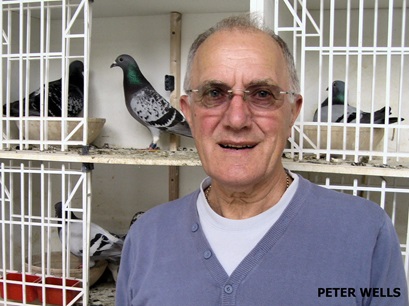
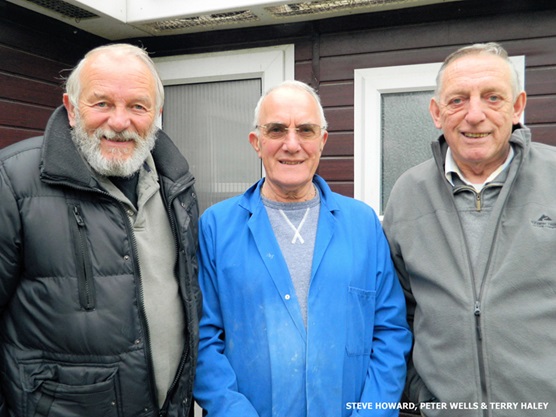
Peter Wells of Dunstable must be described as one of the ‘all time’ greats of the racing pigeon fraternity in the UK, but sadly at the age of 84, Peter has had to pack up his beloved pigeons recently. I have visited Peter Wells several times over the years; the last time was in the company of Terry Haley and Steve Howard in December 2016, when we went to his home to film the loft and pigeons for my YouTube channel. Every time I ask Peter about some of his best performances over his many years in the sport, he has never got a clue about his racing record! I’ve known him for many years and can imagine it is difficult to remember, as his fantastic racing record is as long as your arm. Any way recently the ‘main man’ has got the books out and has given me a few details of his winnings over the years. Are you ready for this? Between 1978 and 1993 he won 693 first prizes including: 52 Open Races, 111 times 1st Federation, 7 times 1st Combine and twice 1st Amalgamation. Peter calls himself, ‘Mr. Nearly’, as he has never won a National or Classic race but in the last four years had recorded: 2nd open (twice), 3rd open (three times), 4th open (twice), 1st section (five times), 2nd section (eight times), 3rd section (six times), 4th section (twelve times). Some of his recent highlights were: 2016: 3rd, 7th, 9th section D, 6th, 21st, 26th open BBC Fougeres (1864 birds), 1st club, 1st Federation, 2nd Combine Yelverton (3330 birds), 2nd section D, 2nd open BBC Fougeres (1856 birds), 2nd, 3rd section, 6th, 7th open BICC Le Mans (3944 birds): 2015: 2nd section E, 4th open NFC Saintes (3740 birds), 1st, 3rd, 4th, 5th, 6th, 7th section D, 13th, 23rd, 24th, 25th, 26th, 27th open BBC Carentan (2132 birds), 3rd, 4th,7th section D, 3rd, 4th, 8th open BBC Messac (1562 birds), 15th, 16th, 17th, 18th, 19th section E, 158th, 160th, 162nd, 163rd, 164th open NFC Fougeres (8635 birds) five birds came together, 1st, 4th, 5th, 10th section E, 3rd, 18th, 19th, 57th open NFC Messac: 2014: 3rd, 4th, 7th, 8th, 10th section D, 136th, 138th, 144th, 145, 148th open BBC Carentan (2233 birds), 1st, 2nd, 6th, 8th, 10th section D, 14th, 15th, 41st, 47th, 55th open BBC Messac (2261 birds), 4th, 6th section E, 79th, 164th open NFC Carentan (9416 birds), 3rd, 6th, 7th section E, 365th, 424th, 455th open NFC Cholet (7006 birds), 2nd, 4th section D,22nd, 41st open BBC Niort (1005 birds), 4th section E, 54th open NFC Messac (6393 birds), 4th section D, 13th open BBC Fougeres (1008 birds): 2013: 1st, 2nd, 4th, 6th section D, 2nd, 3rd, 6th, 9th open BBC Carentan (2617 birds), 2nd, 4th, 7th section E, 47th, 68th, 94th open NFC Carentan, 2nd, 4th, 5th, 6th section, 11th, 28th, 30th, 32nd open L&SECC Messac, 5th, 6th section D, 13th, 14th open BBC Messac (1305 birds). A fantastic racing record, second to none!
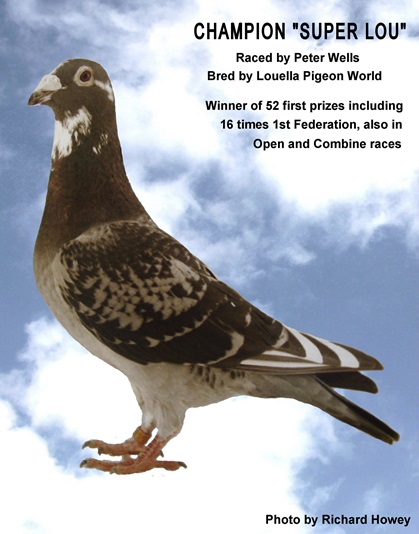
The Wells loft had some great seasons for many years racing in the Combine, Classic and National. Peter has been a fantastic pigeon racer since he started up in the sport in 1974 but was mostly noted for being the owner and racer of one of the greatest sprint pigeons in the world of pigeon racing ever, Champion ‘Super Lou’. This wonderful Joseph Van Ramadonk widowhood cock was bred by Louella Pigeon World at Leicester and Peter purchased him in a batch of pigeons, which were eight for £80, so ‘Super Lou’ cost him £10. This champion blue chequer pied cock won 52 first prizes, including 16 times 1st Federation, 1st open Combine and several Open races. Peter told me, he has clocked ‘Super Lou’ and then had a batch of five come together five minutes later and taken the first six in the Federation result, that how good that pigeon was! He was always paired to ‘Brandy’ and she was another one from the Joseph Van Ramadonk job lot, and she was also another brilliant racer, winning several premier races. Champion ‘Super Lou’ was sold back to Louella for £11,500!
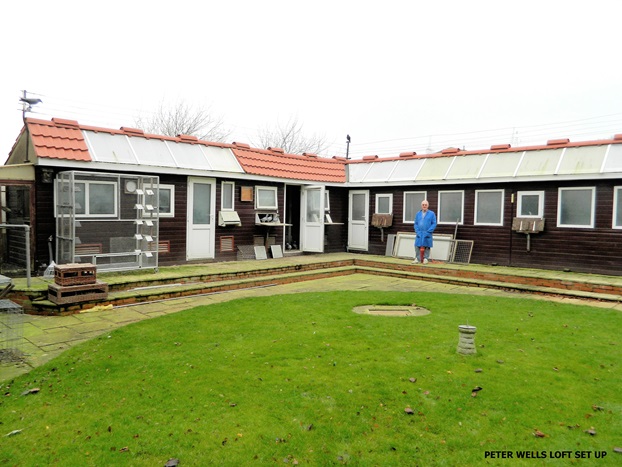
Peter had a very smart 100ft ‘L’ shaped loft, which consisted of three widowhood sections, two young bird sections and a stock section, with a wire flight so the inmates can get out into the weather. He had his pigeons on deep litter for all his 50 years in the sport and thinks it’s brilliant, as it creates a dry atmosphere in the loft. The racing loft had double glazed frosted windows and doors, ETS trapping off landing boards and roof was made of Perspex for light and warmth. The stock loft was closed in with louvered windows for ventilation and this loft housed the widowhood hens during the racing season. Peter raced 50 cocks on widowhood and 20 hens on the roundabout system and these were paired up in mid-February. The hens never saw the cocks and some of the racers were flown dry, and never reared youngsters before racing, but were allowed to rear a late bred once racing had finished. Peter fed a good quality widowhood mixture and broke down in the early part of the week. The hens were only shown to the racing cocks on marking night in the early part of the season and never for the channel events, and Peter told me at that time, he liked all racing from 80 through to 550 miles. One of Peter’s best birds at that time was the yearling blue cock, ‘Marieke Vink’, bred by his good friend Simon Schofield and winner of: 1st section, 2nd open BBC Carentan, 15th section, 19th open NFC Messac, 12th section, 22nd open BBC Messac.
The main family raced were basically Janssen and Peter told me his loft housed several variations of the family, and have been very successful for him at all distances. The stock birds were fed on a standard ‘breeding’ mixture and he told me his best stock bird was his Janssen hen number ‘11’. He kept 15 pairs of stock birds and these were paired up the same time as the race team in February so a few eggs off premier breeders could be floated. Peter said, he paired up quite late compared to most fanciers, but hated breeding in cold weather. Most of his best success had come from sprint / middle distance racing, although he had clocked a couple time on the day from Pau and Tarbes (560 miles). In recent days when he was looking to bring in new stock birds he was looking for quality long distance bloodlines. Good performance was the key when selecting new stock birds. He bred about 80 young birds to race every season and they were put on the darkness system. Peter said, his darkness system wasn’t very good, as he forgot and the youngsters sometimes got a lay in! The youngsters got lots of training through to 50 miles and Peter enjoyed racing them through the whole programme. They raced to the perch and were fed a standard young bird mixture and he maintained young birds have to race to get an education, and experience the English Channel in the first year. Peter told me he liked late breds, as training them after the racing season had finished, gives him something to do and he had produced a few good racers from his late breds over the years. The birds were not parted in the winter months and for the moult they were fed a good resting mixture with oils on it. Peter was a heavy barley feeder in the winter months.
Peter’s entry into the sport of pigeon racing was very similar to so many other fanciers I have met, with his relation picking up a pigeon with a broken leg in a local quarry and being fascinated with the bird, Peter volunteered to nursed it back to health. He had always liked pigeons and on contacting the owner, he didn’t want the bird back. The pigeon was housed in an empty chicken shed in Peter’s back garden and he obtained a John Gore hen to mate to it, and that was the start of him becoming a pigeon fancier. Those first birds bred and the following season Peter won one of the premier races, the Inter Counties Open, with a yearling, which was a brilliant achievement in his first full season racing. Peter told me the fancier who really helped him to start up was John McLaughlin of Dunstable and the top racer at that time was the late Derek Taylor of Leighton Buzzard who won the MNFC and L&SECC. His early pigeons were of the Dordin family and on establishing a small team of racers he joined the Dunstable SR Flying Club. Peter had caught the pigeon ‘bug’ and started as he has continued to do right through his 50 years in the sport, winning big races!
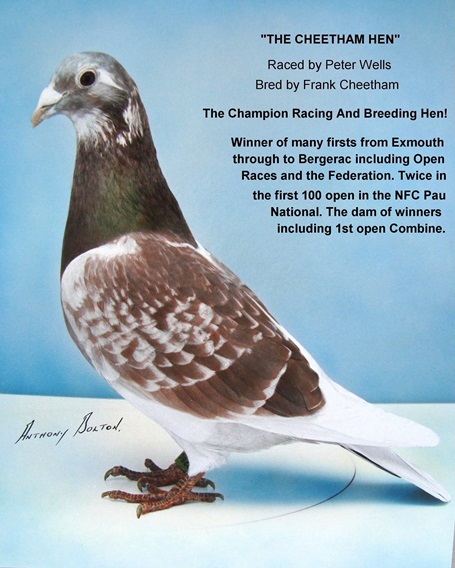
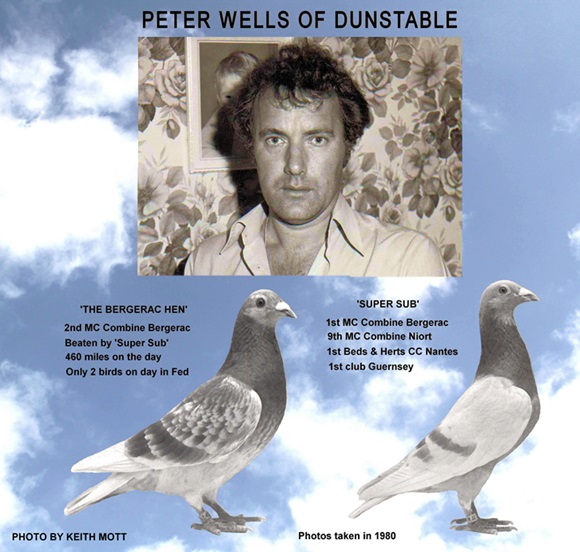
When I asked Peter how many times he had won the Combine he told me he had lost count, but had won it quite a few times and could remember that he had won 1st open Combine three times in one season. One of his best pigeons was the red pied hen, ‘The Cheetham Hen’ and she was bred by Frank Cheetham of Yorkshire. This wonderful hen was a true champion in every sense of the word, winning many firsts from Exmouth (150 miles) through to Bergerac (450 miles), including 1st Federation and Open Races. She also won two positions in the first hundred in the NFC Pau Grand National result and bred a 1st open Combine winner. What a pigeon! I first met Peter Wells in 1980 when he came to my home in Claygate to have his current 1st open Combine Bergerac winner photographed. He had enjoyed a brilliant 1980 season winning 29 firsts including six times 1st Federation and three times 1st Championship Club. He was a great Open Race specialist and in 1980 won 1st, 2nd, 3rd, 4th, 5th, 6th, 7th West Croydon Open Blandford and 1st, 2nd Stopsley Two Bird Open Dorchester. Brilliant pigeon racing, as in those days we used to use rubbers and clocks! In the 1980 season ‘The Cheetham Hen’ won 13th section E, 21st open NFC Pau Grand National (560 miles) with 5,894 birds competing and lifted £744. The Middle Counties Combine flew its longest old bird race from Bergerac in 1980 and the 1,960 birds were liberated at 05.30hrs in a light west wind. Peter Wells had two birds arrive at his loft together at 19.18hrs and he clocked them together to record: 1st Dunstable SR Flying Club, 1st Phoenix SR Flying Club, 1st, 2nd Federation, 1st, 2nd open Middle Counties Combine. Although Peter had won the Combine many times since, he rated this Bergerac performance one of his best! I can remember Peter’s Bergerac Combine winner was a handsome Kirkpatrick mealy cock called, ‘Super Sub’, and he had plenty of previous good form winning: 9th open Combine Niort, 1st club Guernsey and 1st Beds & Herts 3 Bird Championship Club Nantes. The winner of 2nd open Combine Bergerac that day was a red chequer hen bred by Bill Wells of Luton.
Peter liked to do his bit for our sport and was on the National Flying Club committee, President of the Mid-Shires Federation and was on the Federation committee, including forming the race programme ever season. When I asked him what he thought was his best performance to date his reply was, clocking on the day of liberation from the NFC Pau Grand National and winning 1st and 2nd Combine Bergerac in 1980 and clocking the only two birds in the Federation on the day. He had a great respect for the Corkett Family and said they were very dedicated, and work brilliantly as a team with their pigeons. Peter maintained the key to successful pigeon racing is dedication and hard work!
That’s it for this week! I hope my readers have enjoyed our little catch up on Peter Wells; he has been a very special fancier for over 50 years! I can be contacted with pigeon news on telephone number: 07535 484584 or email me on
TEXT & PHOTOS BY KEITH MOTT (www.keithmott.com)